
Starting & charging
Battery or alternator? How to tell which one left you stranded
A battery problem usually shows up before the engine starts. An alternator problem usually shows up after: a battery warning light, dimming lights, or a car that starts with a jump and then dies. Because a failing alternator also drains the battery, test both before replacing either.
If you’re in the Pittsburgh area, Baltimore or Washington, DC, we can diagnose this where the car is parked when the location and the job are a fit for mobile service. In Baltimore and Washington, DC, request service and we’ll confirm availability.
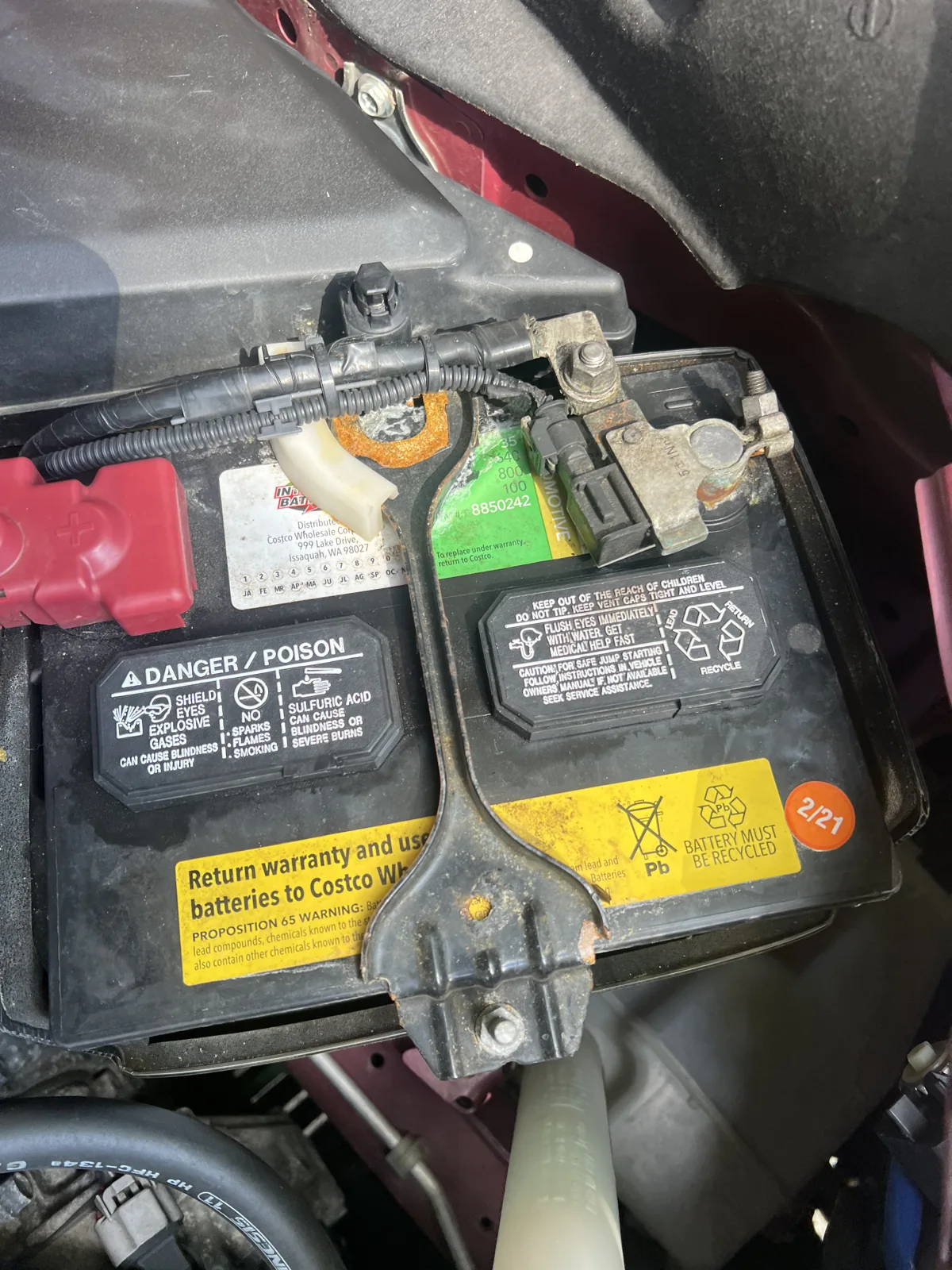
Symptoms before you start vs while you’re driving
The timing of the symptom is often more useful than a single warning light. Use the table as a starting point, then have both the battery and the charging system tested.
| When you notice it | What it can point to |
|---|---|
| The car is slow to crank, clicks, or will not start, especially after sitting | Often a battery or connection problem. Cold weather can make this more obvious. |
| It starts with a jump, then dies a few minutes later | The charging system may not be keeping the battery up. The battery may also be too weak to hold a charge. |
| A battery or charging warning light comes on while the engine is running | This can point to the alternator, the belt, the wiring, or the battery. It should be tested rather than ignored. |
| Lights dim, flicker, or electrical accessories act up while driving | The charging system may not be supplying a steady voltage. A weak battery can add to the symptoms. |
| A new battery failed again after a short time | A charging problem or a drain can take a new battery down. Replacing the battery alone may not be the last step. |
It starts with a jump, then dies a few minutes later
A jump can supply enough current to start the engine. Once you disconnect the jumper cables, the alternator is supposed to run the electrical system and recharge the battery. If the car dies shortly after, the charging system may not be doing that job, or the battery may not be able to hold what little charge it received.
This is one of the clearer clues that you should not only install another battery. Testing both parts avoids paying for a battery that fails again, or an alternator that was not the problem.
Battery light on while driving: what to do
A battery or charging warning light while the engine is running is a reason to reduce electrical load and plan a safe stop soon. If the temperature gauge climbs or the steering suddenly gets heavy, stop as soon as it is safe; on many cars the same belt drives other parts. It does not always mean the alternator has failed, and it is not a reason to keep driving for a long distance and hope it clears. Have the system tested rather than waiting for a no-start.
Why replacing the battery alone can fail again
A weak alternator, a loose or worn belt, poor connections, or something that draws power with the car off can all take a new battery down. If a recently installed battery is already low, describe that when you request service so the visit includes a charging-system and drain check, not only another battery.
If the car goes flat overnight rather than while you are driving, see Battery keeps dying overnight.
What we test on a mobile visit
A mobile visit can test battery condition, connections, charging output and belt condition where the car is parked, when there is a firm, level place to work and permission to be there. Many alternator and battery replacements can be completed on site. Some vehicles have an alternator that is difficult to reach and may need a shop.
Related service pages: mobile alternator replacement, battery replacement, and alternator replacement in Baltimore.
Common questions
How do I know if my alternator is bad?
A battery warning light, dimming lights, or a car that starts with a jump and then dies can all point to a charging problem. Those symptoms can overlap with a bad battery, so testing both is how you confirm it.
Can a mobile mechanic fix an alternator?
Many alternator replacements can be completed at a home, workplace or other permitted location. Access varies by vehicle, and some applications need a shop. We review the vehicle and the parking situation first.
Can I drive with the battery light on?
The light means the charging system needs attention. Plan a safe stop and have it tested rather than continuing for a long distance. How far you can go depends on the battery’s remaining charge and what has failed — there is no reliable mileage guess.
Bad alternator vs bad battery: what’s the difference?
A battery problem usually shows up when you try to start the car. An alternator problem usually shows up while the engine is running, or after a jump when the car dies again. Because one can cause the other, test both before replacing either.